
Service · Clermont, FL
Citrus Tree Removal in Clermont, FL
Lake County was once covered in orange groves, and a lot of what's left is backyard trees slowly dying from citrus greening. We cut them out, grind the stumps, chip the wood, and help you decide what to plant next.
Citrus Tree Removal Clermont Has Needed for Decades
When the Citrus Tower opened in 1956, visitors rode up to look out over orange groves running across the hills in every direction. Lake County had well over 100,000 acres of citrus at its peak. Then came the hard freezes of December 1983 and January 1985, and the Christmas freeze of 1989 finished off much of what growers had replanted. Many owners sold grove land instead of replanting, and those parcels became the neighborhoods many Clermont residents live in today.
Plenty of old grove trees were left in yards when homes went in, and many more were planted by homeowners who wanted fresh fruit. Today, a large share of those trees are declining or dead, mostly because of citrus greening. Removing them is usually one of the simplest tree jobs we do, but there are a few things worth knowing first.
Citrus Greening (HLB) and Why Backyard Trees Are Dying
Citrus greening, also called huanglongbing or HLB, was first found in Florida in 2005. It's caused by a bacterium spread by a tiny insect called the Asian citrus psyllid. Infected trees develop blotchy, uneven yellowing on their leaves, lopsided bitter fruit that drops early, twig dieback, and a slow loss of roots. There's no cure. Commercial growers manage it with intensive care programs, but for most backyard trees, the decline runs its course over several years.
Greening isn't the only reason. Old trees are also hit by root rot, freeze damage, and plain old age, and many grove-era trees were never meant to last 40 years with backyard-level care. If your tree has more bare branches every year and the fruit is small and sour, it's probably not coming back.
Some Clermont residents remember inspectors cutting down healthy-looking backyard citrus in the late 1990s and early 2000s. That was the state's citrus canker eradication program, which removed infected trees and nearby exposed trees in an attempt to stop the bacterial disease. The program ended in 2006 after hurricanes spread canker too widely to contain. Today, removing a backyard citrus tree is the owner's decision; there's no state program cutting them down.
Not every struggling citrus tree needs to go, though. After a hard freeze, a tree can look dead in January and push new growth from the trunk or main limbs by April, so we usually suggest waiting until spring to judge freeze damage before cutting. A tree that still holds a full, mostly green canopy and sweet fruit, even with a few dead twigs, may have years left with good fertilizer and watering. And a lone backyard tree that's slowly declining isn't hurting anything; it's fine to keep picking fruit until it stops producing.
Watch for sprouts coming from below the graft union, the bump near the base where the fruiting variety was joined to the rootstock. If the top dies and those shoots take over, the tree you end up with is the rootstock, often a thorny, sour variety that's rarely worth keeping. That's usually a sign it's time for removal.
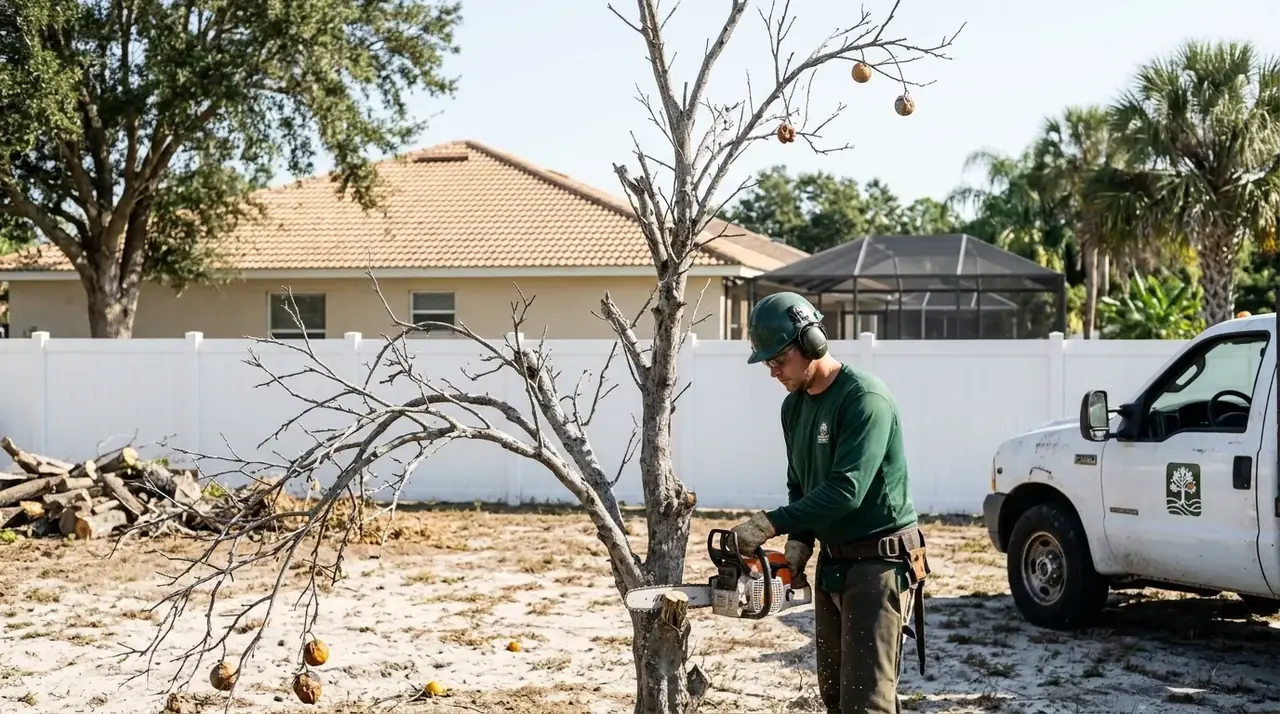
What Our Citrus Tree Removal Includes
- Cutting the tree down in sections, with care around fences, pool cages, and sheds
- Chipping branches and leaves on site, or hauling everything away
- Grinding the stump and main roots below grade
- Removing dropped fruit and debris from the area
- Clearing old grove irrigation pipe, wire, or stakes we find around the trunk
- Advice on what to plant in the space, citrus or otherwise
Citrus Tree Removal Cost in Clermont, FL
Citrus trees are small and light compared to oaks and pines, so removal costs much less than a typical tree removal. Most of the cost comes from access, cleanup, and stump grinding.
| Job | Typical range | What moves the price |
|---|---|---|
| Small dead citrus tree, open yard | $150 – $250 | Size, haul-off vs. chipping |
| Mature backyard citrus | $250 – $400 | Canopy spread, fence or cage nearby |
| Large old grove tree | $350 – $500 | Trunk size, multiple stems, thorny growth |
| Stump grinding per citrus stump | $95 – $150 | Stump size, roots |
| Grove blocks and multiple rows | Priced per acre | Tree count, vines, debris, access |
Can Dead Citrus Be Burned or Chipped?
Chipping is the easiest option, and the chips make decent mulch once they've aged a bit. Greening is spread by the psyllid, not by dead wood, so chipped material from a removed tree isn't a disease risk to your other plants. Hauling the wood off is the other common choice if you don't want the chips.
Burning is more complicated. Florida allows homeowners to burn yard waste from their own property in small piles without a Florida Forest Service authorization, but only if the pile is small, setback distances from the house, roads, and woods are met, burning happens during allowed hours, and no local ordinance prohibits it. Many cities around Clermont restrict open burning, and burn bans are common during dry periods. Check with your city or the Florida Forest Service before lighting anything, and read our post on what to do with dead citrus trees for more options.
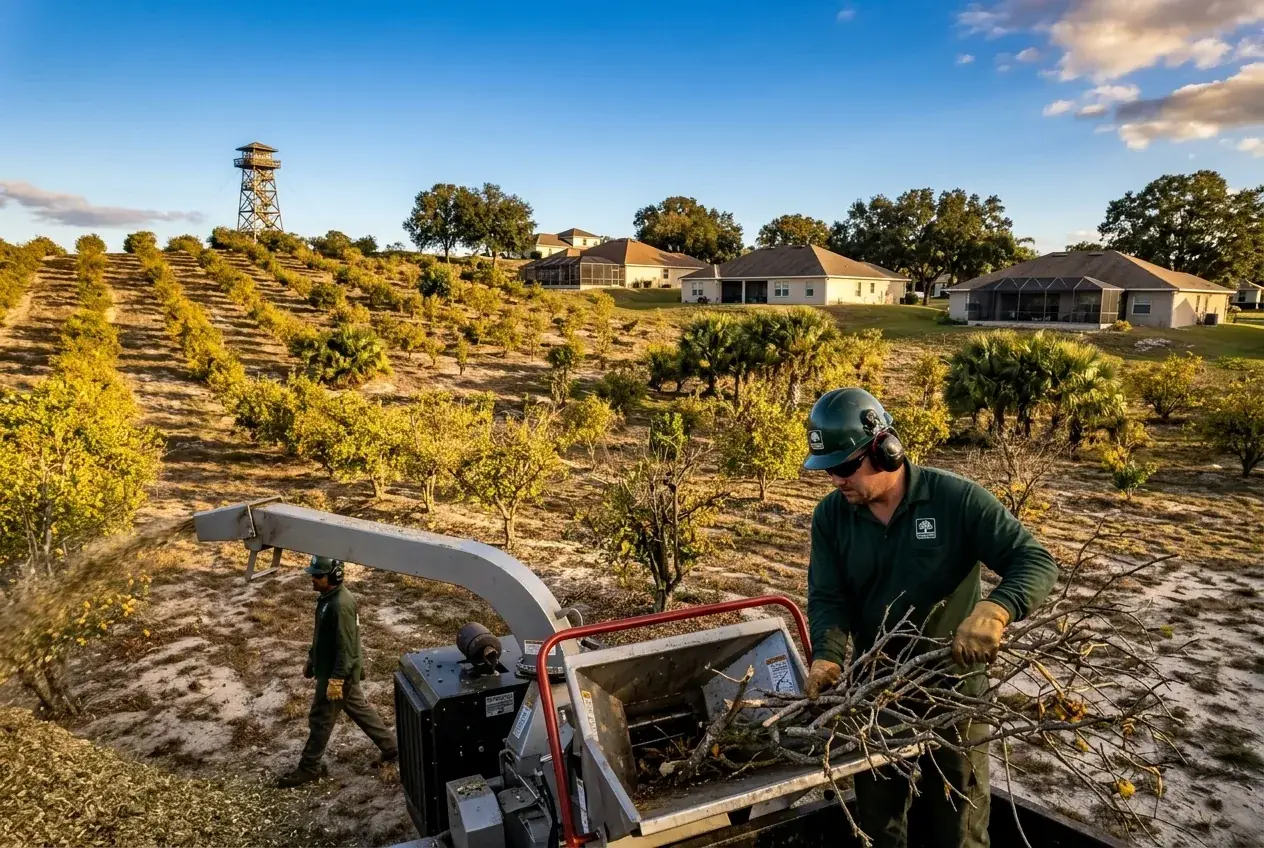
Clearing Old Citrus Grove Blocks in Lake County
Around Clermont, Groveland, Howey-in-the-Hills, and Montverde, there are still parcels of old grove land with rows of dead or neglected trees. Clearing those is a bigger job, priced per acre. We cut and chip the trees, grind or pull stumps, and remove buried irrigation pipe, wire, and debris left from the grove days. Overgrown rows often have air potato vines and volunteer oaks, which we clear at the same time. Our land clearing page covers permits and wildlife checks, which can apply when grove land is cleared for building.
Grove rows on the hills were usually planted to follow the contour of the slope, and the sand between them has often been bare or thinly covered for years. When we clear a sloped block, we leave the chipped material spread across the rows to hold the ground until something new takes root. A small block of a few dozen trees is usually a one- or two-day job; larger parcels get scheduled in phases so the ground isn't left open across the whole site at once.
Dead citrus wood is dense and dries hard, which makes it good for smoking meat or for a backyard fire pit once seasoned. If you'd like to keep some, tell us before the job and we'll cut it to length and stack it.
Replanting After Citrus Removal
You can still plant citrus in a Clermont yard, but greening is everywhere in Florida, so any new tree will be exposed to psyllids. If you want to try, buy from a registered Florida nursery rather than bringing in plants from out of state or from a neighbor's cuttings, and be prepared for regular fertilizing, insect control, and a tree that may not last as long as citrus did in the grove era. Some homeowners grow citrus in screened enclosures to keep psyllids out.
Many people decide to replant with something else. Native trees like southern magnolia, live oak (if there's room), or smaller trees suited to sandy soil are good options. Our list of trees to plant after a removal covers what thrives here. Just give the new tree a few feet of space from the old stump, and consider having it ground deeper with stump grinding.
Citrus Tree Removal Across South Lake County
We remove citrus trees all over the area, including Downtown Clermont, Minneola, Howey-in-the-Hills, and Winter Garden. Most single-tree jobs take under two hours, and several trees can usually be done in one visit. Request a free quote, and let us know how many trees you have and if you'd like the stumps ground.
Questions
Citrus Tree Removal Questions From Clermont Homeowners
Look for blotchy, uneven yellowing on the leaves that doesn't match on both sides of the leaf vein, which is different from the even yellowing of a nutrient shortage. Fruit is often small, lopsided, green at one end, and bitter, and it drops early. Branches die back over time. The UF/IFAS Extension office in Lake County can help confirm a diagnosis if you're unsure.
Not cured, no. There's no treatment that eliminates the bacteria in a backyard tree. Careful fertilizing, watering, and psyllid control can keep an infected tree producing for a few more years, but the decline usually continues. If your tree is already mostly bare and the fruit is inedible, removal is usually the practical choice, and it gives you back the space for something new.
Most backyard citrus trees cost between $150 and $500 to remove, depending on size and access. Small dead trees in open yards are at the low end, and big old grove trees near fences or pool cages are at the high end. Stump grinding adds about $95 to $150 per stump. Multiple trees on one visit reduce the per-tree cost.
Yes. Citrus greening spreads through the Asian citrus psyllid feeding on live trees, not through dead wood or chips. Chipped wood from a removed citrus tree won't infect your other plants. Let the chips age a few weeks before spreading them around plants, and keep them a few inches away from the trunks of other trees and shrubs.
Possibly, but check first. Florida allows burning yard waste from your own property in small piles without a Forest Service authorization, as long as you meet setback distances, follow allowed burning hours, and no local rule prohibits it. Many cities restrict open burning, and burn bans are common in dry months. Chipping or hauling the wood is usually simpler and avoids the risk.
From the mid-1990s until 2006, Florida ran a citrus canker eradication program that removed infected trees and nearby exposed trees, including many in residential yards, to try to stop the disease. The program ended after the 2004 and 2005 hurricanes spread canker too widely to contain. Earlier, the freezes of the 1980s had wiped out much of Lake County's commercial groves.
You can, but go in knowing greening is present throughout Florida, so any new tree will be at risk. Buy from a registered Florida nursery, plan on regular fertilizer and insect control, and consider a screened enclosure if you're serious about growing fruit. Many Clermont homeowners choose a different tree instead. Either way, plant a few feet away from the old stump.
Yes. We clear grove blocks of any size, cutting and chipping trees, grinding stumps, and removing buried irrigation pipe, wire, and other debris. Grove jobs are priced per acre after a site visit, since tree count, vines, and access vary a lot. If the land is being cleared for development, permit and wildlife survey rules may also apply.
Not always. Citrus stumps are small and will eventually break down on their own. But if you want to mow over the area, lay sod, or plant something new nearby, grinding is worth it. Some citrus rootstocks can also send up sprouts from the stump, and grinding below grade usually stops that. It's inexpensive to do during the removal.
Yes. Citrus trees are small enough that we can usually cut them in short sections by hand and carry the pieces out, with no risk to the screen enclosure. Thorny branches get cut carefully and carried, not dragged across the cage. If roots have lifted pavers or the deck, we can grind them back while we're there.
Related
Other tree work we do
Dead citrus out of the yard
Quick removals, stumps ground, ready to replant or sod.
Mon–Sat 7:00am–7:00pm (24/7 emergency line for storm work) · Licensed & insured