
Service · Clermont, FL
Land Clearing in Clermont, FL
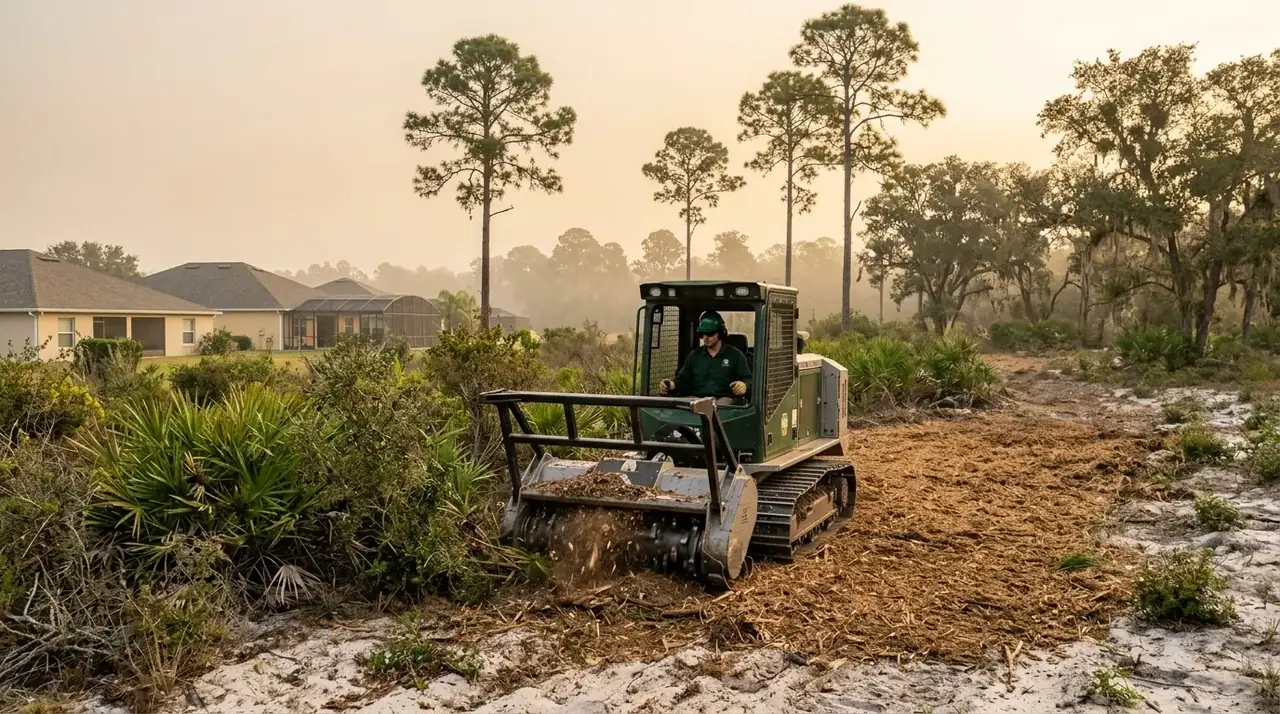
Overgrown lots, old grove land, fence lines buried in brush, and homesites that need opening up: we clear it with mulchers, saws, and grinders, and we flag the permit and wildlife questions before any machine moves.
Land Clearing in Clermont for Lots, Groves and Acreage
South Lake County is full of land that's halfway between wild and developed. There are old citrus groves that were abandoned after the freezes of the 1980s and are now thick with vines and volunteer oaks. There are sandhill lots with turkey oaks, longleaf pines, and saw palmetto. And there are half-acre and acre homesites where a few big trees need to stay, but everything else between them needs to go. We handle all of it, from a single overgrown backyard to multi-acre parcels.
Every clearing job starts with a walk of the property and a simple question: what's the land going to be used for? A new house pad needs different work than a horse pasture, a view toward the lake, or a firebreak along a fence line. That answer decides what we remove, what we keep, and whether the debris gets mulched in place or hauled off.
Lot Clearing Services Around South Lake County
- Underbrush and palmetto clearing: removing understory while keeping selected trees
- Forestry mulching: grinding brush and small trees into a mulch layer that stays on site
- Selective tree removal: taking out marked trees while protecting the ones you want to keep
- Old grove clearing: removing rows of dead or abandoned citrus trees and their stumps
- Fence-line and trail clearing: opening up overgrown property lines and access paths
- Haul-off: loading and removing trunks, brush, and debris when mulch isn't wanted
- Stump grinding: for home pads, lawns, and areas that will be mowed
Invasive plants are a big part of many South Lake clearing jobs. Camphor trees spread readily from birds dropping their seeds and form dense thickets under old oaks. Air potato vines climb over abandoned grove rows and smother whatever they cover. Cogongrass, a sharp-edged invasive grass, spreads across disturbed sandy ground and burns hot. Mulching knocks these back, but camphor resprouts and cogongrass returns from underground runners, so we'll talk with you about follow-up mowing or treatment if you want them gone for good.
Ridge sand makes the work itself fairly forgiving. Machines move well on dry sand, roots come out of loose soil cleanly, and there's rarely the rock you'd hit in other parts of the country. The tradeoffs are soft ground in low spots during the summer rainy season and sand that shifts quickly on slopes once the cover is gone.
Lake County Land Clearing Permits and Tree Rules
Clearing land is regulated more heavily than removing one tree in a backyard. The City of Clermont, Minneola, Groveland, the other towns, and unincorporated Lake County each have their own rules for land development, and many require a permit and a tree survey before a lot is cleared for construction. Some require replacement trees or a payment into a tree fund when protected trees are removed. Florida Statute 163.045, which limits permits for dangerous trees, only applies to residential property and doesn't cover clearing a lot for development.
The rules change often enough that we don't print specific numbers here. We check what applies to your parcel before we quote it, and we'll point you to the right office. Our post on tree permits in Clermont covers the residential side. For anything tied to a building permit or new construction, confirm the requirements with your city or Lake County planning before work starts.
Gopher Tortoises and Lot Clearing in Clermont
The deep, dry sand of the Lake Wales Ridge is prime gopher tortoise habitat, and you'll find their burrows across undeveloped lots in Clermont, Groveland, and Minneola. The gopher tortoise is a state-listed threatened species in Florida, and its burrows also shelter dozens of other animals. Under Florida Fish and Wildlife Conservation Commission rules, a permit is required to relocate tortoises before land clearing or development that comes within 25 feet of a potentially occupied burrow.
That means surveys first. FWC-authorized agents survey the area, mark burrows, and handle any permitting and relocation. Only authorized agents can capture and move tortoises. If clearing can stay more than 25 feet from every burrow without harming a tortoise, a permit may not be needed, but you still need to know where the burrows are. We flag apparent burrows during our walk-through and won't run equipment near them until the survey and permit questions are settled.
Wetlands, Lakes and Clearing Near Water
Many lots in the Clermont area border lakes, marshes, or wet depressions that fill during the rainy season. Wetlands and shorelines have their own protections, and clearing in or near them can require permits from the water management district (Lake County is split between the St. Johns River and Southwest Florida districts), the county, or other agencies. Parts of south Lake County also fall within the Green Swamp Area of Critical State Concern, which comes with extra development review.

If your property touches Lake Minneola, the Clermont Chain of Lakes, Lake Apopka, or any wet area, we'll discuss setbacks and keep a buffer of vegetation along the edge until the rules are confirmed. Clearing too close to the water can mean fines, required replanting, and erosion that sends sand straight into the lake.
Land Clearing Cost in Clermont, FL
Clearing costs depend mostly on how dense the vegetation is, what size the trees are, and what happens to the debris afterward.
| Job | Typical range | What moves the price |
|---|---|---|
| Light brush and palmetto, per acre | $1,800 – $3,500 | Density, terrain, trees kept |
| Medium clearing with small trees, per acre | $3,500 – $6,500+ | Tree count, stump grinding, slope |
| Heavy or dense woods, per acre | Quoted per site | Large trees, haul-off volume, access |
| Old citrus grove blocks | Quoted per acre | Tree count, vines, stumps, irrigation debris |
| Small lot or backyard clearing | $800 – $2,500 | Size, how much is hauled vs. mulched |
| Haul-off instead of mulching | Adds to total | Volume, distance to the disposal site |
Forestry Mulching vs. Haul-Off
Forestry mulching grinds brush and small trees right where they stand, leaving a layer of mulch on the ground. It's usually cheaper, keeps sandy soil from washing on slopes, and doesn't require trucking anything away. It's a good choice for pastures, wooded lots, trails, and areas you're opening up for views. Haul-off costs more but leaves bare ground, which builders often need for house pads, driveways, and septic systems. Many jobs use both: mulching across most of the land and hauling from the building area. Where a house pad is going in, we can also follow up with stump grinding so the builder isn't fighting buried wood when the foundation crew arrives.
On the Clermont hills, keeping some cover matters. Bare sand on a slope can wash out in the first heavy summer storm. Our post on sandy soil and slopes explains why. Clearing old grove land? Our citrus tree removal page covers how we handle groves.
Lot Clearing Across Clermont, Groveland and Mascotte
We clear land throughout South Lake County and west Orange County, with a lot of work in Groveland, Mascotte, Howey-in-the-Hills, and Gotha. A typical acre takes one to three days depending on density, and big parcels are scheduled in phases. Tell us where the land is and what you plan to do with it, and we'll set up a site visit. Single large trees on cleared land can also be handled through our tree removal service.
Questions
Land Clearing Questions From Clermont Homeowners
Light clearing of brush, palmetto, and small trees usually runs $1,800 to $3,500 per acre, and medium clearing with more trees runs up to $6,500 or more. Heavy woods with large trees, lots of haul-off, or difficult terrain are quoted after a site visit. Mulching in place is generally cheaper than hauling everything away. We'll walk the land and give you a written price.
Often, yes, especially if you're clearing for construction. The City of Clermont, nearby towns, and Lake County each have land development and tree protection rules, and many require a permit, tree survey, or replacement planting. The requirements depend on where your lot is and what you're building. We check the rules for your parcel and point you to the right office, but confirm with your city or the county before clearing.
Don't clear or fill around them. Gopher tortoises are a threatened species in Florida, and FWC requires a permit to relocate them before land clearing within 25 feet of a potentially occupied burrow. An FWC-authorized agent can survey the property, mark burrows, apply for permits, and relocate tortoises if needed. We work around burrows and won't clear near them until that process is complete.
Forestry mulching uses a machine with a heavy rotating drum to grind trees, brush, and stumps into mulch in a single pass. The mulch stays on the ground, protecting soil from erosion and slowly breaking down. It's fast, doesn't require hauling, and works well for lots, pastures, trails, and firebreaks. It's not ideal for house pads, where builders usually want bare ground.
Yes, and that's one of the most common requests. We'll walk the property with you and mark the trees you want to keep, usually healthy live oaks, longleaf pines, and sabal palms. We clear the underbrush and smaller trees around them while staying back from their root zones. It costs a little more than clearing everything, but the land is usually more valuable with good mature trees left standing.
Yes. Abandoned groves are common around Clermont, Groveland, and Howey-in-the-Hills, often with dead trees, overgrown vines, and old irrigation pipe buried in the rows. We cut and remove the trees, grind stumps where needed, and pull out debris. Grove clearing is usually priced per acre based on tree count and condition. See our citrus tree removal page for more on how we handle groves.
Clearing near lakes and wetlands is restricted. Depending on where your property is, you may need permits from the county or the water management district, and there are usually setback rules for how close to the water you can clear. We'll leave a buffer along the shoreline until the rules are clear and help you figure out who to contact.
Most acres take one to three days, depending on how thick the vegetation is, how many large trees there are, whether stumps need grinding, and whether debris is mulched or hauled. Light brush can go faster with a mulcher. Dense woods with big trees and full haul-off take longer. Permits and wildlife surveys, when needed, usually add more time than the clearing itself.
It can if too much ground is left bare, especially on the sandy slopes around Clermont. Mulching leaves a protective layer that helps hold sand in place. On building sites, silt fencing and stabilizing the soil quickly after clearing are common requirements. We'll talk about erosion control as part of the plan and leave cover on areas that don't need to be bare.
We don't burn on-site. Open burning of land clearing debris in Florida generally requires authorization from the Florida Forest Service, and many cities and neighborhoods don't allow it at all. Burn bans during dry periods also come up often in Lake County. Mulching in place or hauling to a disposal site is simpler and avoids the smoke, permits, and fire risk.
Related
Other tree work we do
Clear the lot, keep it simple
Walk the land with us and get a per-acre price that spells out what is included.
Mon–Sat 7:00am–7:00pm (24/7 emergency line for storm work) · Licensed & insured