Service · Clermont, FL
Pine Tree Removal in Clermont, FL
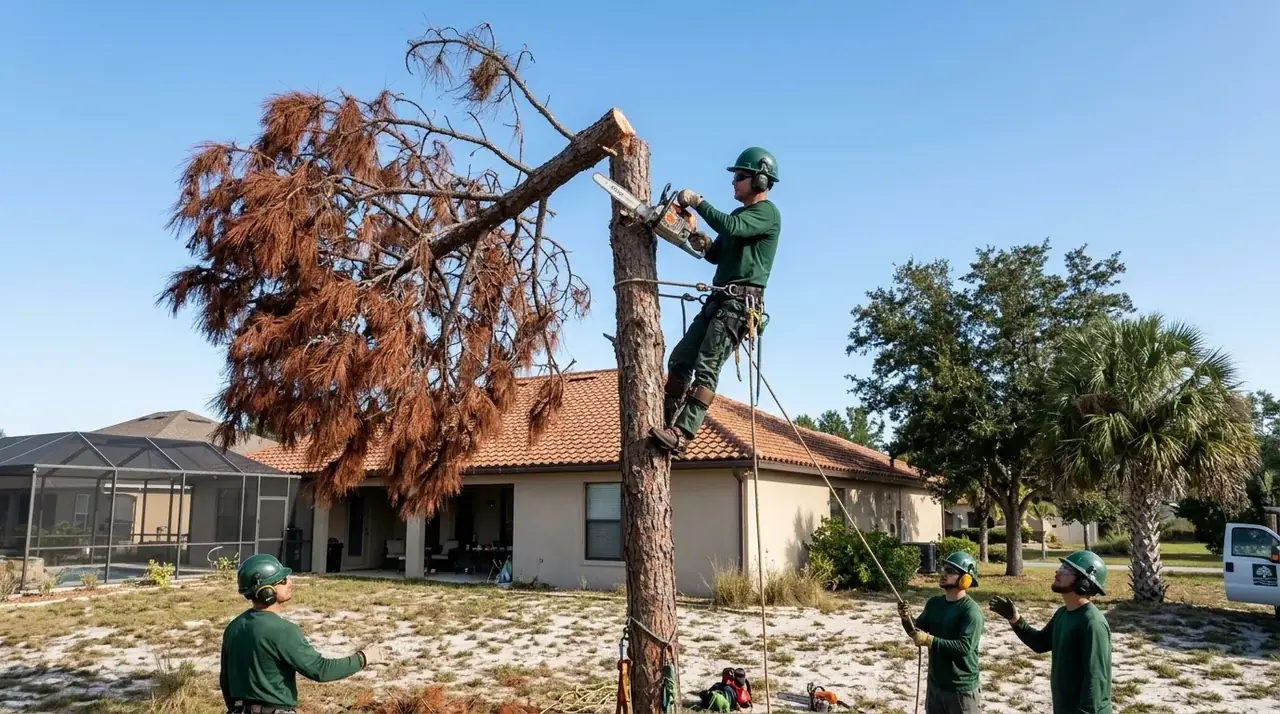
A pine that turns brown from the top down rarely recovers. We take down dead, beetle-hit, lightning-struck, and leaning pines in controlled sections, and we look at the pines around them so one problem doesn't spread.
Pine Tree Removal Clermont Properties Rely On
Pines are some of the tallest trees in Clermont yards, and they tend to die quickly once something goes wrong. A longleaf or slash pine can look fine in March and be rust-colored by June. When that happens, the wood dries out and gets brittle fast in Florida heat, and a dead pine can start dropping its top or snapping at mid-trunk within months. Removing it early, while the wood is still sound enough to climb, is safer and usually cheaper.
We take down pines of every size, from a small sand pine by a driveway to a tall slash pine over the house. Most come down in sections, top first, with each piece lowered on a rope if there's anything underneath to protect. Where the drop zone is wide open, a tall pine can sometimes be felled in one piece, which cuts time and cost. We decide that at the estimate, and the written price covers cutting, cleanup, and haul-off.
Pine Beetles in Lake County: Southern Pine Beetle and Ips
Bark beetles are a big reason pines die around Clermont. The southern pine beetle is the most aggressive species in Florida, able to kill groups of healthy pines during outbreaks. More common in residential yards are Ips engraver beetles, which usually go after pines already weakened by drought, lightning, root damage from construction, or storm injury. Either way, once beetles have successfully colonized a pine, there's no treatment that saves it.
- Pitch tubes: small, popcorn-like lumps of sap on the bark where beetles bored in
- Boring dust: reddish-brown sawdust in bark crevices and around the base
- Needle color: fading from green to yellow, then red-brown, often starting at the top
- Bark changes: small holes and loose patches; under the bark, winding tunnels
Whether a beetle-hit pine needs to come down right away depends on what's nearby. A single dead pine with no other mature pines close by isn't much risk of spreading the problem. A dead pine beside several healthy ones is a different story, since the next generation of beetles can move to those trees. We'll recommend removal timing based on what's around it, and we take care not to wound neighboring pines during the job, since fresh injuries attract more beetles.
Lightning-Struck Pines Around Clermont
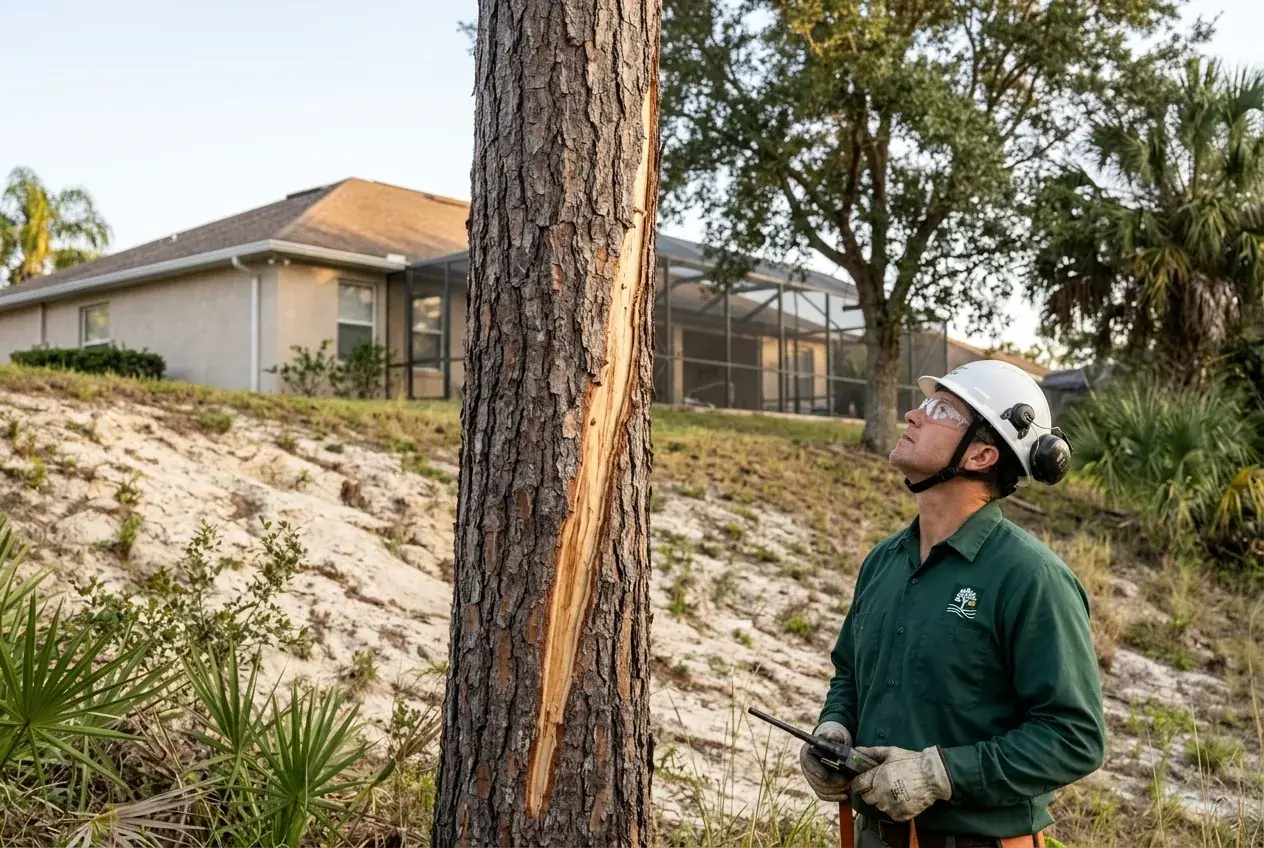
Florida gets more lightning than almost anywhere in the country, and tall pines are frequent targets. A strike often leaves a long spiral or straight strip of torn bark down the trunk. Some pines survive, but many decline over the following weeks or months, partly because the damage invites beetles. If a pine near your home is hit, keep an eye on the needles. Browning in the crown within a few months usually means the tree is dying. We can assess it and tell you whether to wait or remove it now.
Longleaf, Sand Pine and Slash Pine on the Ridge
The sandhills around Clermont were historically longleaf pine country, with turkey oaks and wiregrass beneath. Longleaf is deep-rooted, tough, and handles fire and wind better than most pines. If you have healthy longleaf on your property, it's often worth keeping. Sand pine grows in drier scrub areas, tends to be short-lived, and has a shallow root system that makes it prone to tipping when it gets older. Slash pine is common in yards, grows fast, and is one of the species most often hit by beetles after a dry spring. Construction stress shows up in pines years later, too; a pine whose roots were cut for a pool or driveway may hang on for two or three seasons before beetles finish it.
Leaning pines are a concern on the Clermont hills. When several days of heavy rain soak the sand, roots lose grip, and a pine can shift several degrees in a single storm. Look for cracked or lifted soil opposite the lean. A pine that moved recently, especially one leaning toward the house, should be checked quickly. Our article on trees on Clermont's sandy slopes explains why roots act this way here.
Pine Tree Removal Cost in Clermont, FL
Pine removal costs follow tree height, like other removals, but pines have their own quirks. They're usually tall with few low limbs, which can make felling easier in open areas. But dead pines can be brittle, and tall pines near houses need careful sectional work.
| Job | Typical range | What moves the price |
|---|---|---|
| Small pine under 30 ft | $350 – $850 | Access, whether it can be felled whole |
| Medium pine 30–60 ft | $850 – $1,800 | Climbing vs. felling, nearby structures |
| Tall pine 60 ft+ | $1,800 – $3,500+ | Height, trunk diameter, wood volume |
| Crane-assisted pine removal | Add $600 – $1,800 | Brittle dead wood, tight lots |
| Several beetle-killed pines | Quoted together | Number of trees, cleanup volume |
Prices for dead pines can run higher because brittle wood often means a crane or lift instead of climbing. Our tree removal cost guide has more detail. For pines that fall or hang up during a storm, see our emergency tree removal page.
Removing Pines Near Houses, Pool Cages and Lines
A tall pine standing ten feet from a two-story home leaves no room to fell it, so the work happens from the top down. A climber removes the few upper limbs, then cuts the trunk into short pieces, each one tied off and lowered by the ground crew. If the pine is dead and the wood is too brittle to trust with a climber's weight, we switch to a bucket lift or a crane so nobody is hanging from wood that could snap. Pieces get set down on the driveway or lawn, never dropped toward a screen enclosure.
Pines growing along the street often reach toward the overhead lines. If any part of the tree is within reach of the primary wires, the utility has to make it safe first, and we'll help you get that request started with Duke Energy or SECO Energy. Once that's handled, a typical single-pine job takes half a day, and a group of beetle-killed pines might take a full day or two, including chipping and loading every log.
Pine Sap, Pine Straw and When a Pine Can Stay
Not every pine complaint means removal. Sap dripping on cars or pavers is annoying but normal, especially in spring. Pine straw piling on the roof or pool cage can be managed with pruning and gutter cleaning. Many Florida gardeners actually like pine straw as a free mulch for beds. A healthy, upright longleaf or slash pine with green needles from top to bottom and no beetle signs is usually a fine tree to keep, and native pines are well suited to the dry ridge sand that many other shade trees struggle in. Keeping irrigation spray off pine trunks and avoiding root damage from trenching or new hardscape go a long way toward keeping one healthy.
Removal makes sense when a pine is dead or dying, has beetle activity, has a lightning scar with browning, has developed a new lean, or is growing too close to the house. Once it's down, stump grinding takes care of what's left; pine stumps don't resprout, so grinding is mostly about mowing and reuse of the space.
Pine Tree Removal Near You
We remove pines across South Lake County and west Orange County, including the sandhill lots of Groveland, the hills of Montverde, wooded parcels in Gotha, and newer neighborhoods in South Clermont. Most standard removals are scheduled within one to two weeks, and dead pines near homes get priority. Request a free estimate and send a photo of the crown if you can.
Questions
Pine Tree Removal Questions From Clermont Homeowners
The most obvious sign is needle color. Needles that fade from green to yellow and then reddish-brown, especially starting at the top of the tree, usually mean the pine is dying. Look for small blobs of sap on the bark, called pitch tubes, and reddish sawdust in bark cracks, which point to bark beetles. Once more than half the crown has browned, the tree is almost never recoverable.
Once beetles have successfully attacked and the needles are turning, no. The beetles cut off the tree's ability to move water and nutrients, and there's no treatment that reverses that. Preventive insecticide treatments exist for high-value pines before an attack, but they're not practical for most yards. The best step is removing infested trees quickly when healthy pines stand nearby.
Not always immediately, but watch it closely. Some pines survive a strike, especially if the damage is a narrow strip of bark. Many decline over a few weeks or months, often because beetles move in. If the crown starts browning, the tree is dying and should be removed before it becomes brittle. We can assess a struck pine and tell you whether to wait or act.
Clermont's sandy soil drains well normally, but after days of heavy rain, it becomes saturated and soft, and pine roots can lose their grip. If a pine has shifted since the storm, check the soil on the side opposite the lean. Raised or cracked soil means roots have broken or pulled loose. A pine that moved recently, especially toward a house, should be looked at right away.
Pine removal usually costs $350 to $850 for small pines under 30 feet, $850 to $1,800 for medium ones, and $1,800 to $3,500 or more for tall pines over 60 feet. Dead pines may cost more if the brittle wood makes climbing unsafe and a crane or lift is needed. We give a written price after seeing the tree and what's around it.
They can fail faster. Dead pines dry out quickly in Florida heat and become brittle within months, and they often drop their tops or snap at mid-height. Dead oaks tend to shed limbs gradually before the trunk fails. That's why we suggest removing dead pines sooner rather than later, especially if they're near a home, driveway, or play area.
It depends on where you live and the tree's size and species. Some local governments protect large longleaf pines or other trees above a certain trunk size. Florida law also limits permit requirements for residential trees documented as dangerous by an ISA certified arborist or licensed landscape architect. We check the rules for your address on every estimate. See our permit guide for more.
It shouldn't if it's done carefully. The main risk is wounding neighboring pines with falling limbs or equipment, since fresh wounds attract bark beetles. We plan drop zones and equipment paths to avoid hitting other trees. If beetles killed the pine being removed, taking it out promptly actually helps protect the healthy pines around it.
Pine straw on the roof can hold moisture, clog gutters, and stain surfaces, and needles in the pool clog skimmers and filters. That doesn't mean the pine needs to go. Pruning back limbs over the roof or cage, cleaning gutters regularly, and using a pool cover all help. Pine straw raked off the lawn also makes good mulch for planting beds.
Healthy longleaf pines are usually worth keeping. They're deep-rooted, long-lived, and handle wind and drought better than most pines. A healthy slash pine with a full green crown is often fine too, as long as it isn't leaning toward the house. Older sand pines are more likely to tip over, so they deserve a closer look. We can walk your property and give you an honest opinion on each.
Related
Other tree work we do
Pine turning brown?
Do not wait for it to drop limbs. Get it looked at this week.
Mon–Sat 7:00am–7:00pm (24/7 emergency line for storm work) · Licensed & insured